


Active Deterrence Security Cameras in Irvine: A 2026 Guide
For active deterrence security cameras Irvine properties need, value depends less on how loudly a camera warns and more on when and where it responds. A light or audio alert triggered by routine activity can become a nuisance, while a camera that only records may not provide a timely cue. Thoughtful design connects the response to the site’s layout and everyday activity.
If you’re weighing deterrence features, it’s reasonable to ask which functions fit your property and how to limit unwanted alerts. This guide explains how active deterrence works, where cameras can support entrance and perimeter coverage, and which site conditions and configuration choices matter. The same planning principles apply to homes and businesses in Irvine, Beverly Hills, and across Orange County.
You’ll also see how AI analytics can work with alarms and access control where appropriate, connecting detection to a coordinated response. Digital-Vision.AI assesses properties, then designs and installs integrated video surveillance around their layouts and security priorities. That creates a practical path from camera selection to carefully configured coverage.
Table of Contents
What Active Deterrence Security Cameras Do for Irvine Properties
Active deterrence security cameras Irvine properties use combine video monitoring with a configured action intended to draw attention to an event or discourage unwanted activity. A standard camera may capture footage for later review. An active deterrence setup can also trigger a visible light or an audible or speaker-based warning when selected conditions are detected. These features may support a response, but they don’t guarantee an incident will be prevented.
How active deterrence differs from standard surveillance
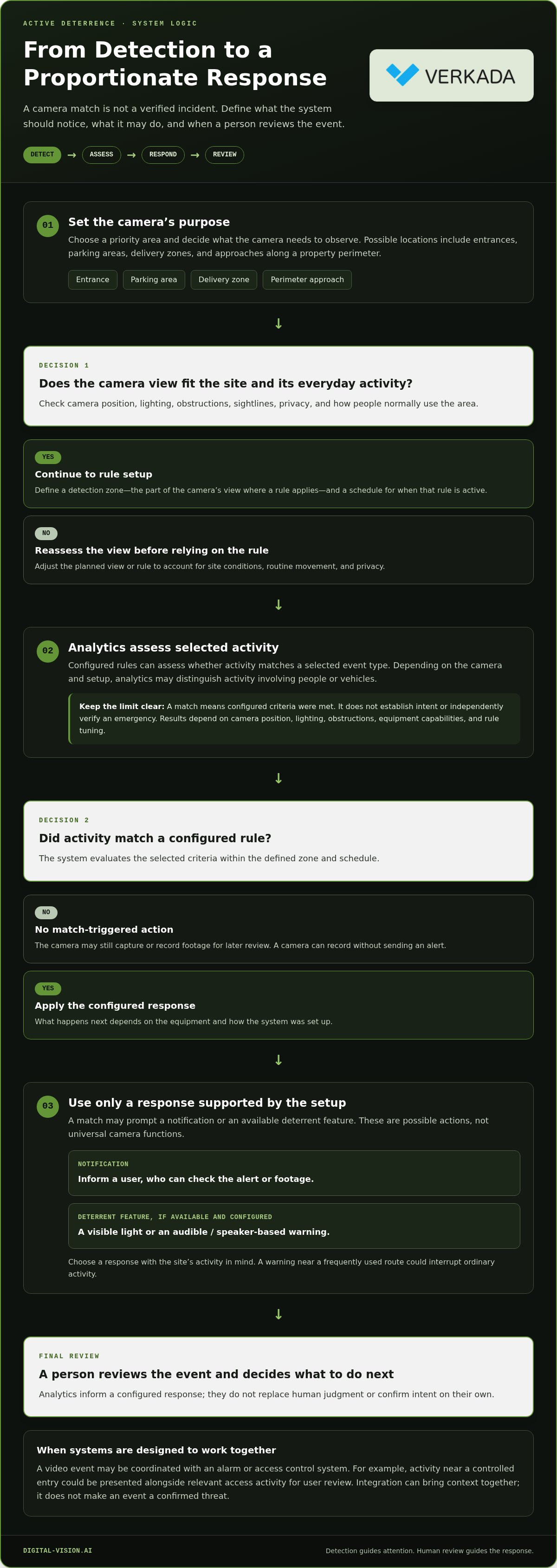
Think of the system as a sequence: detection identifies a possible event, a notification informs a user, a configured deterrent provides a warning, and a person reviews the situation and decides what to do next. Those functions are distinct. A camera may record without sending an alert, or notify a user without activating a warning. Available actions depend on the equipment and how the system is configured.
Video analytics can help classify selected events, such as activity involving a person or vehicle, instead of treating every movement alike. Capabilities vary by camera and setup. For background on how software analyzes video, see What is Video Analytics? Analytics inform the system’s configured response. They don’t replace human judgment or confirm intent on their own.
Where Irvine homes and businesses may use deterrence
Potential locations include entrances, parking areas, delivery zones, and approaches along a property perimeter. Start by asking what each camera needs to observe and how people normally use that space. A camera aimed at a rarely used side entrance has a different role from one covering a shared driveway or loading area with regular activity.
Residential priorities may include monitoring an entrance or driveway while accounting for routine household movement. Commercial sites may focus on access points, deliveries, or activity around parking and operating areas. Neither setting automatically calls for warnings everywhere. A visible or audible alert near a frequently used route could interrupt ordinary activity, so weigh its potential value against how that area is used.
Walls, landscaping, lighting, and sightlines affect what a camera can observe. Privacy should shape the view and placement from the outset, particularly where spaces may be private or shared. A site assessment connects those conditions to practical security goals, helping determine where active features have a clear purpose instead of applying them across the property by default. This approach is useful for varied residential and commercial sites in Irvine, Beverly Hills, and Orange County.
How Detection, Analytics, and Deterrence Work Together
An active deterrence system is most useful when each stage has a defined role. The camera captures activity, analytics evaluate it against configured criteria, the system applies an assigned action, and a user reviews the event. This sequence turns a camera view into a coordinated process without treating an automated alert as a verified incident.
Camera observes: The camera captures activity within its field of view.
Analytics classify: Configured rules assess whether activity matches a selected event type.
System applies an action: Depending on the equipment and setup, a match may prompt a notification or deterrent feature.
User reviews: A person checks the alert or footage and decides what action is appropriate.
What AI video analytics contribute
Analytics can focus attention on selected activity instead of generating the same response for every movement. A detection zone is a defined part of the camera’s view where a rule applies. A schedule sets when that rule is active, helping align monitoring with a property’s routine. Depending on the camera and configuration, analytics may distinguish selected event types, such as people or vehicles.
Results depend on practical conditions. Camera position, lighting, obstructions, equipment capabilities, and rule tuning all influence what the system can identify. A notification means the configured criteria were met. It doesn’t establish intent or independently verify an emergency. Human review remains important, particularly before escalating an event.
How deterrence features and integrated systems coordinate
After a rule is matched, a configured system might send an alert or activate an available camera feature, such as a light or speaker-based warning. These are examples, not universal camera functions. The appropriate action depends on the equipment, site activity, and system design. Careful configuration helps keep an automated response proportional to the event being detected.
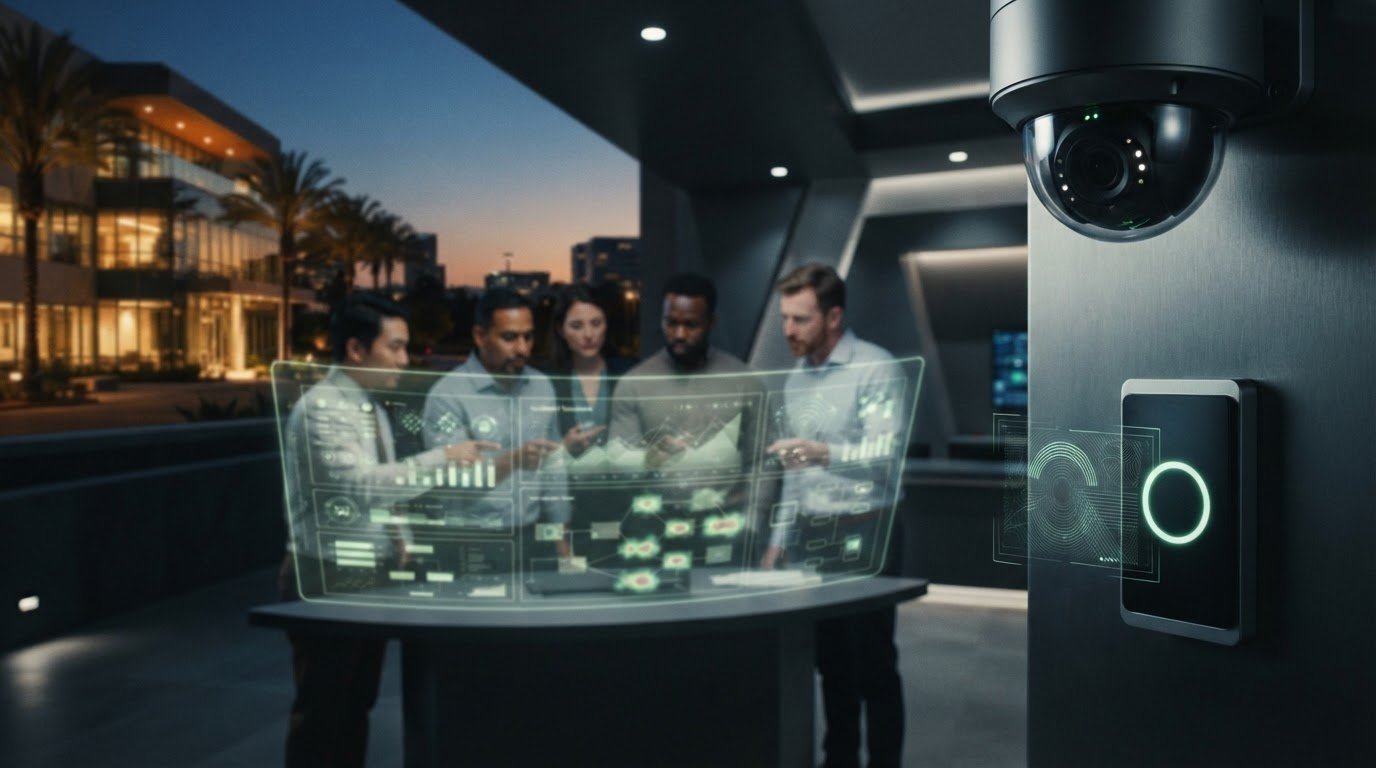
Where components are designed to integrate, a video event may also be coordinated with an alarm or access control system. For example, an event near a controlled entry could be presented alongside relevant access activity for user review. Integration doesn’t make every event a confirmed threat, but it can bring useful context together. Explore the unified security ecosystem installation guide for more on coordinated system design.
For active deterrence security cameras Irvine properties can benefit from, a professional assessment helps match analytics, device actions, and system integrations to the site. Digital-Vision.AI designs and installs integrated security systems, with professional security system design tailored to property needs.
Can Active Deterrence Cameras Cause Nuisance Alerts in Irvine?
Yes. If detection rules don’t reflect normal site activity, a system may send unwanted notifications or activate a warning during routine movement. A camera covering a shared driveway, for example, could encounter regular arrivals that aren’t security concerns. Visible or audible deterrence may draw attention to a genuine event, but unnecessary activations can disrupt operations and affect nearby residents.
The goal isn’t to promise that every false alert can be eliminated. Instead, configure the system around relevant activity, then review and refine it as the property’s routines become clear. For active deterrence security cameras Irvine sites can use effectively, consider detection behavior and warning features together rather than setting them independently of the site.
Which settings help reduce unnecessary activations?
Start with the area being monitored. A detection zone can focus rules on a priority entrance or perimeter approach instead of reacting to movement across the entire camera view. Schedules can align monitoring with expected operating hours, delivery patterns, or other routine activity. Sensitivity and escalation logic should reflect what the system is intended to detect and what action should follow.
After installation, review event patterns. If repeated alerts correspond to predictable, non-security activity, adjust the zone, schedule, or detection settings where appropriate. If an alert is useful but a warning is disruptive, consider the system’s response separately from its notification. Configuration can reduce the risk of nuisance events, but conditions and activity can change, so periodic review remains valuable.
How privacy and neighbor considerations affect camera placement
Camera views should prioritize the areas the property needs to protect while limiting incidental views beyond its boundaries. Placement, angle, and detection zones can keep attention on an entrance or parking area rather than neighboring spaces or unrelated activity. Audible warnings also deserve careful consideration: assess their intended location and timing alongside applicable local requirements before enabling them.
Audio capture and privacy obligations require particular care. Requirements can depend on the setting and type of recording, so review current applicable rules before enabling audio recording or configuring speaker-based warnings. A professional assessment can help balance coverage goals, ordinary activity, and surrounding properties. See the professional security assessment guide for Southern California for more on site-specific planning.
Digital-Vision.AI’s security assessments connect camera placement and configuration to a property’s actual priorities. Explore a tailored security assessment as a practical starting point for planning coverage.
Plan Active Deterrence Camera Coverage for an Irvine Site
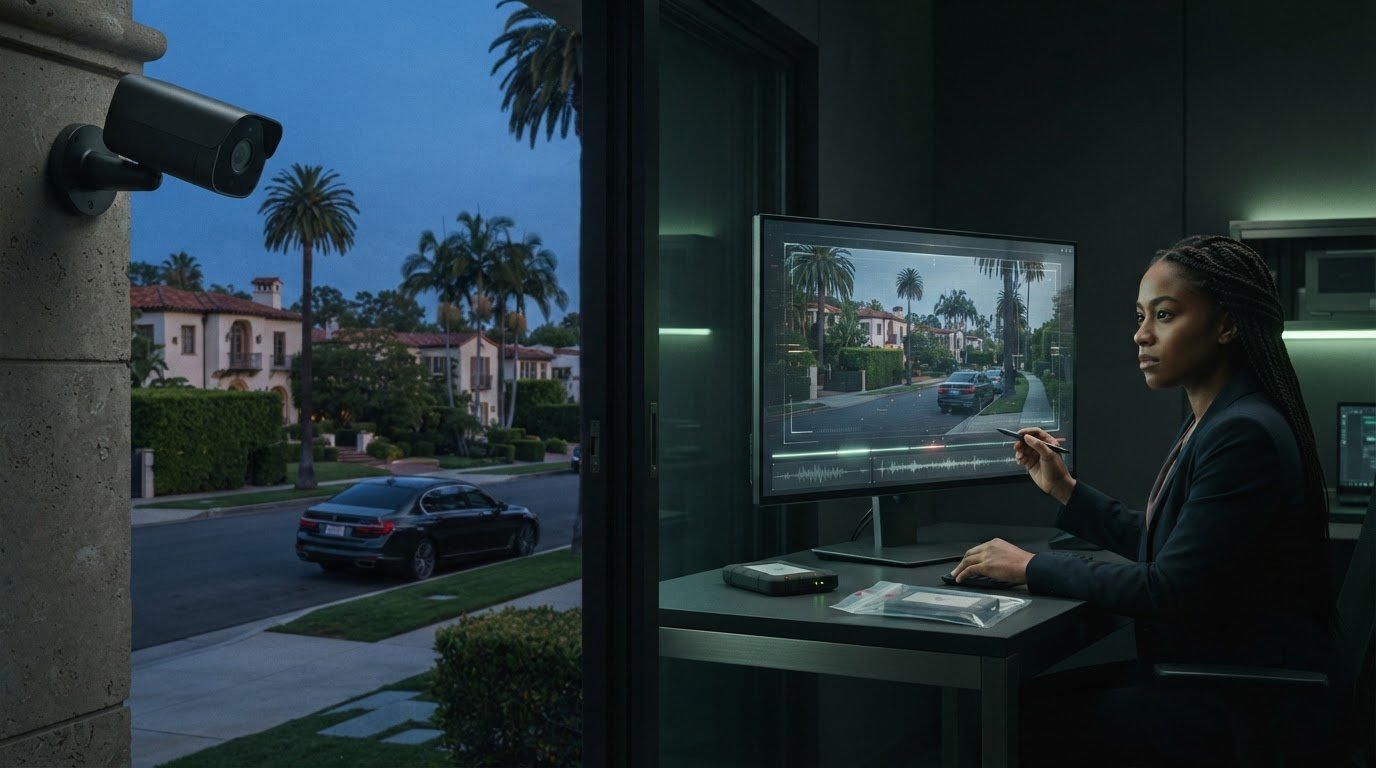
Effective coverage starts with the property, not a preset camera count. A home, office, and commercial site have different entrances, traffic patterns, lighting, and operating needs. A site-specific assessment helps determine where video coverage is useful, whether deterrence features fit those areas, and how equipment placement should account for privacy and connectivity.
Coverage priorities for Irvine homes, offices, and commercial sites
Map entry points, vehicle approaches, shared spaces, parking, and delivery areas. Then consider how people use each location throughout a typical day. For a business, staff movement, deliveries, operating schedules, and access workflows can shape which views and events matter. At a residence, priorities may include appropriate views of entrances and perimeter approaches while limiting incidental views into private or neighboring areas. Not every zone needs an active warning.
A practical planning sequence
Assess the site. Review the property layout, existing security components, lighting, network conditions, and normal activity.
Identify priority zones. Mark the entrances, parking areas, delivery points, or perimeter approaches that align with the property’s security goals.
Design coverage. Select camera positions and views that account for sightlines, obstructions, lighting, and privacy. Equipment selection depends on the site’s conditions and objectives.
Configure the system. Set relevant analytics, detection areas, schedules, notifications, and supported deterrence actions to match intended use.
Review performance. Test coverage and system behavior, then refine settings as needed based on event patterns and changes in site activity.
For active deterrence security cameras Irvine properties can rely on as part of a considered security plan, these steps connect equipment choices to real-world use. Request a free security assessment to begin planning coverage around your property’s layout and priorities.
Installation, configuration, and review
Professional installation puts the plan into practice through appropriate mounting, connectivity checks, analytics configuration, and system testing. Where the design calls for it, cameras can be coordinated with alarms or access control so relevant events and system activity work together. Integration should support the site’s actual operating workflows and depends on the selected equipment and system design.
Review the AI security camera installation guide for more on professional deployment. Ongoing maintenance and technical support can help keep the system operating dependably as property needs and conditions evolve.
Professional Active Deterrence Camera Installation in Irvine
Professional installation connects camera selection and system behavior to the way a property is actually used. Digital-Vision.AI assesses residential and commercial sites in Irvine, then designs and installs video surveillance systems around the property’s layout, security priorities, and operating needs. The company also serves clients in Beverly Hills and Orange County. Where appropriate, cameras can be integrated with alarms or access control as part of a coordinated system.
What a tailored installation process addresses
An assessment provides the foundation for project-specific recommendations. It helps identify relevant views and environmental conditions, and clarify how entrances, parking areas, or delivery activity shape coverage. From there, system design can align camera placement and analytics with the events the property needs to monitor while accounting for connectivity and other security components.
Installation puts the designed equipment in place and configures the system for its intended use. Testing helps evaluate camera views, connectivity, analytics, and any integrated functions. The result is a plan grounded in the site, rather than a generic arrangement that assumes every property has the same risks or activity.
Keeping the system dependable after installation
Security needs can shift as a site changes. New routines, revised access procedures, or changes to the surrounding environment may affect which events matter and how analytics should be configured. Reviewing system behavior over time can help keep settings aligned with current operations. Maintenance and technical support also help address component and system needs as they arise.
For active deterrence security cameras Irvine property owners and businesses can use as part of a considered security strategy, installation is only one part of dependable operation. Explore the security camera maintenance guide for Southern California for more on ongoing system care.
A tailored design can bring video, alarms, and access control into a unified approach where the site calls for it. Schedule a free Irvine security assessment to discuss camera coverage and system design for your property.
Build a More Thoughtful Security Plan
Active deterrence security cameras Irvine properties use should be selected and configured around real site conditions, not simply added wherever a camera can be mounted. Detection, notifications, and visible or audible warnings serve different purposes. Carefully chosen zones and settings can help reduce unwanted activations. A site-specific plan also considers privacy, daily activity, and the areas that matter most.
Professional design and installation can bring those decisions together. Digital-Vision.AI provides AI-powered video surveillance for residential and commercial properties in Irvine, Beverly Hills, and Orange County, with the ability to integrate cameras with alarms and access control where appropriate. This coordinated approach aligns system behavior with the property’s layout and operational priorities, while maintenance and support help sustain dependable operation over time.
Start with a clearer understanding of your property’s needs. Request a free security assessment for your Irvine property, and take the next step toward a security system designed around how your site works.
Frequently Asked Questions
How do active deterrence security cameras work?
Active deterrence cameras combine video monitoring with configured actions that may draw attention to selected activity. A camera observes an area, analytics can assess whether activity matches rules, and the system may send a notification or activate a supported feature, such as a light or speaker-based warning. A user reviews the event and decides what to do. Equipment and settings determine which actions are available, and detection alone doesn’t verify intent or guarantee prevention.
Are active deterrence cameras effective for businesses in Irvine?
They can support a business security plan when coverage and responses suit the site. A camera focused on a delivery entrance, parking area, or restricted approach may help draw attention to activity that meets configured criteria. Effectiveness depends on placement, lighting, network conditions, analytics, and how staff review notifications. Irvine businesses should also account for operating schedules and routine movement so the system supports daily workflows instead of disrupting them.
Can active deterrence cameras reduce unwanted activity without creating nuisance alerts?
Careful configuration can reduce the risk of unnecessary alerts, but no setup can guarantee their elimination. Detection zones can focus rules on relevant approaches, while schedules and sensitivity settings can reflect normal site activity. Review event patterns after installation and adjust settings if routine movement repeatedly triggers notifications or warnings. For active deterrence security cameras Irvine properties use, balancing visible deterrence with neighbors’ comfort and the property’s operations is part of system design.
What is the difference between active deterrence cameras and standard security cameras?
Standard security cameras primarily capture footage for live viewing or later review. Active deterrence cameras can add configured responses to selected detected events, such as a light or audible or speaker-based warning, depending on the equipment and system setup. Recording, detection, notification, deterrence, and human review are separate functions. A camera may provide some without all the others, so the system’s intended behavior depends on its design and configuration.
Do active deterrence security cameras need to be professionally installed?
Professional installation isn’t inherently required for every camera, but it can help align placement, connectivity, analytics, and system behavior with a property’s needs. A professional assessment considers entrances, sightlines, lighting, network conditions, privacy, and normal activity before recommending coverage. Digital-Vision.AI designs and installs AI-powered video surveillance for residential and commercial properties in Irvine, helping tailor camera configuration to the site rather than relying on a generic placement plan.
Can active deterrence cameras integrate with alarms and access control?
Yes, cameras may be integrated with alarms or access control when the selected components and system design support coordination. For example, relevant video and access activity may be brought together for a user to review. Integration can provide useful context, but an automated event isn’t the same as a verified incident or emergency response. Digital-Vision.AI designs integrated security systems for Irvine homes and businesses, with the configuration shaped around site priorities.
What privacy considerations apply to security cameras in California?
Camera placement should respect privacy expectations. California prohibits secretly recording or viewing people in private areas such as bedrooms, bathrooms, and changing rooms. Audio recording requires particular care: California law generally requires all parties’ consent to record confidential communications where there’s a reasonable expectation of privacy. Limit views to appropriate areas, consider disabling audio, and verify current requirements for your specific setting before recording or deploying warnings that use audio.

Comments