


Beverly Hills Small Business Security: 2026 Guide
Choosing a security system for small business Beverly Hills owners can use day to day starts with the property, not the number of cameras. Consider how customers and staff move through the space, which areas need restricted access, and what should happen after closing. Those details help determine whether cameras alone are enough or whether alarms and access control would serve a separate purpose.
Cameras provide visibility, while alarms support intrusion detection and access control manages entry to selected areas. A practical plan matches each component to a specific need and fits the way the team works.
This guide covers how to assess a property, identify day-to-day security needs, and choose a combination of video surveillance, alarms, and access control. It also explains what to consider before installation and how the components can work together as a manageable system.
Digital-Vision.AI is based in Beverly Hills and designs and installs security systems for commercial properties. A free security assessment can help define a practical scope for your business. Integration, maintenance, and support help keep the system aligned with your needs.
Table of Contents
What Should a Small-Business Security System in Beverly Hills Protect?
How Cameras, Alarms, and Access Control Work Together in Beverly Hills
Is a Camera-Only Security System Enough for a Beverly Hills Business?
How to Plan a Small-Business Security System in Beverly Hills
Professional Security System Design for Beverly Hills Small Businesses
What Should a Small-Business Security System in Beverly Hills Protect?
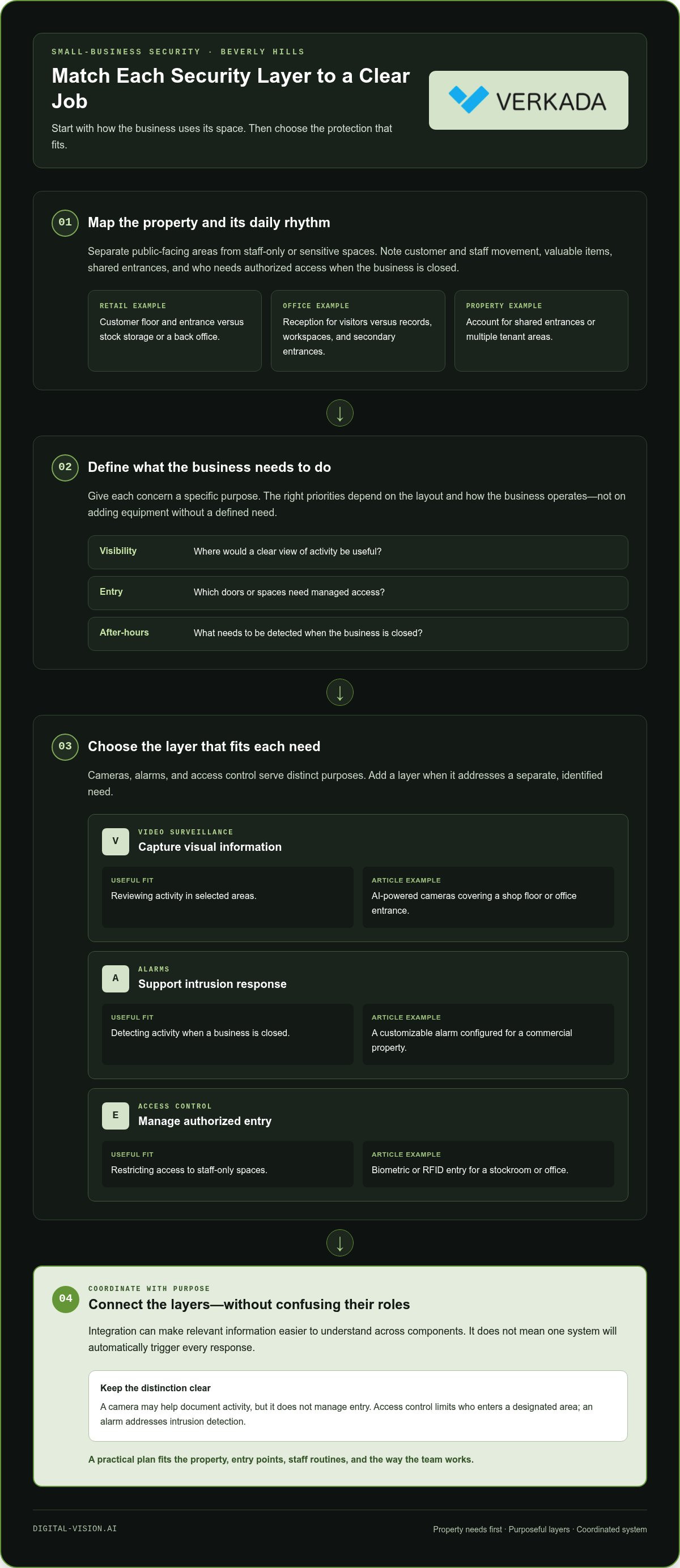
Start with the business, not a camera count. A boutique, professional office, and small commercial property have different customer access patterns, staff routines, valuable items, and closing procedures. Planning a security system for small business Beverly Hills properties starts by mapping those patterns, then matching protection to the way the business operates.
A small-business security system coordinates protection for people, property, and access around how a business uses its space. Consider what needs to be seen, which areas should be restricted, and what should happen when the property is closed. More equipment is not automatically more useful if it does not address a defined need.
Map the business’s exposure before choosing equipment
Separate public-facing areas from staff-only and sensitive spaces. In a retail shop, the entrance and customer floor serve a different purpose from stock storage or a back office. In a professional office, reception may be open to visitors while records, workspaces, and secondary entrances require more controlled access. A small commercial property may also have shared entrances or multiple tenant areas to account for.
Next, map the property’s daily rhythm: when customers are present, when staff arrive and leave, and who needs authorized access while the business is closed. A camera can help monitor a space, but it does not control who enters. That distinction helps clarify whether a location needs visual coverage, managed entry, intrusion detection, or a combination.
Set practical goals for a Beverly Hills business
Choose goals that solve operational problems. A retailer may want clear views of customer areas and stock access. An office may prioritize controlled entry to staff-only rooms. A business that is sometimes unoccupied may place greater emphasis on intrusion detection. These are planning examples, not fixed formulas: the right priorities depend on the layout and how the business is used.
Security should also fit the customer experience and staff routine. Consider whether employees can follow entry procedures easily, whether visitors can be directed appropriately, and whether the team can complete closing tasks consistently. The aim is to support normal operations, not create unnecessary friction.
Visibility: Identify locations where a clear view of activity would be useful.
Entry: Decide which doors or spaces need managed access.
After-hours protection: Define what needs to be detected when the business is closed.
A site assessment can turn these goals into a focused scope by reviewing the property and its routines, rather than relying on broad assumptions about the neighborhood. For context on the wider use of outsourced security functions, Wikipedia provides an overview of Managed Security Services for Small Businesses. The physical protection plan should still reflect the specific premises, people, and access needs of the business.
How Cameras, Alarms, and Access Control Work Together in Beverly Hills
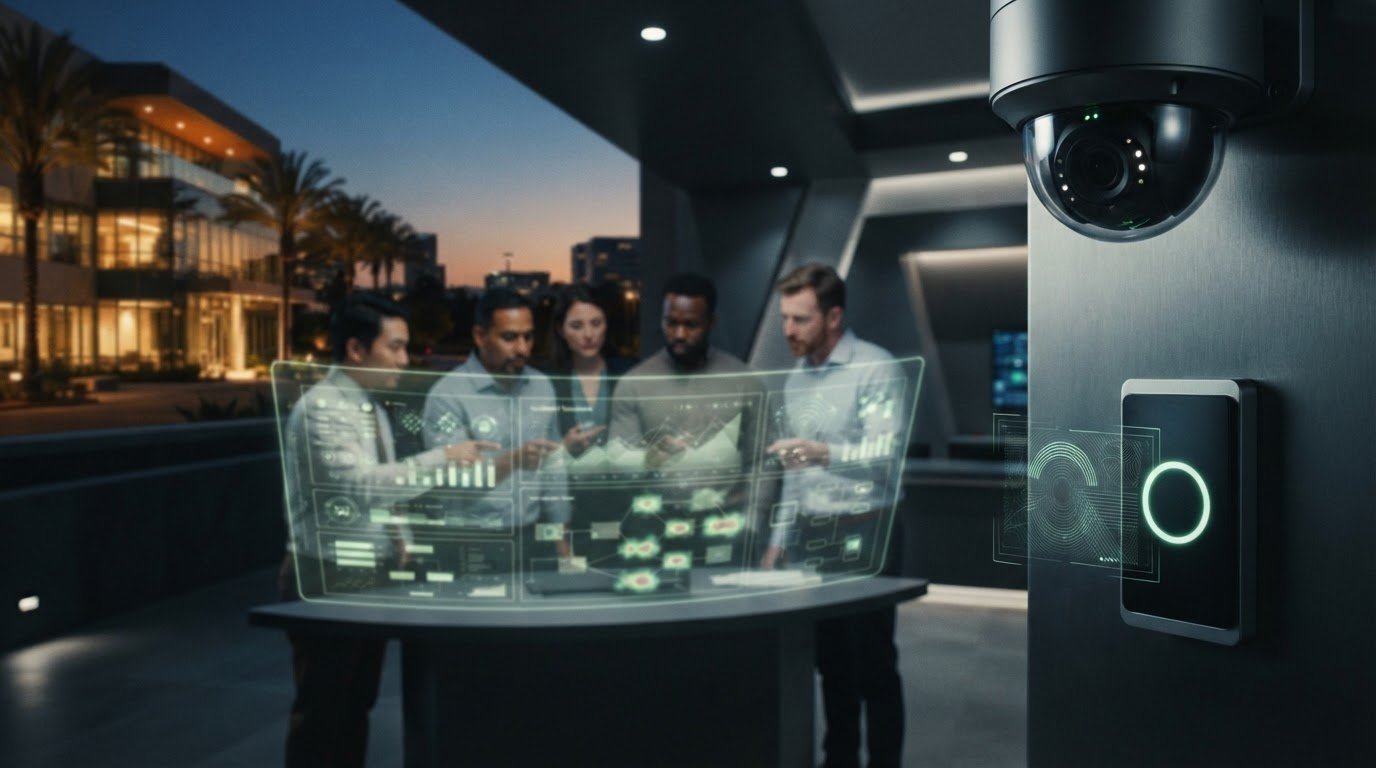
Each security layer has a distinct job. Video surveillance captures visual information for review, alarms support an intrusion-focused response, and access control manages who can enter selected areas. An integrated security system for small business Beverly Hills businesses can coordinate these functions while keeping each component focused on a clear purpose.
The right combination depends on what the business needs each layer to do. A camera may help document activity, but it does not manage entry. Access control can limit who enters a designated area, while an alarm addresses a different need: intrusion detection. Integration can make relevant information easier to understand across components, but it does not mean one system will automatically trigger every response. For a broader view of how components can be coordinated, explore this unified security ecosystem installation guide.
What video surveillance contributes to a small business
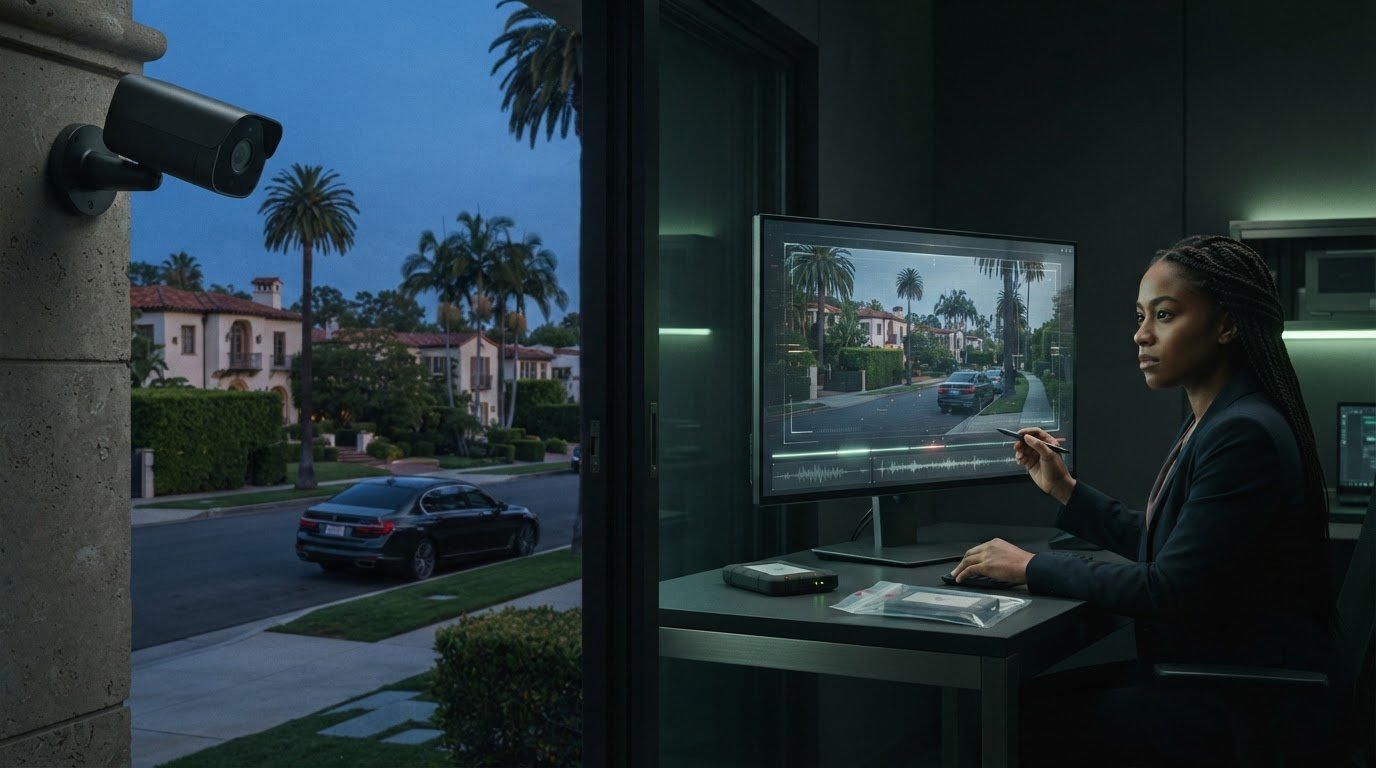
AI-powered, high-definition cameras provide visual coverage of selected areas and can support later review of recorded activity. In a Beverly Hills retail setting, that might mean focusing on customer-facing areas or a stockroom entrance; in an office, it could mean observing a shared entrance. Choose camera locations based on the activity the business needs to see. For camera-specific considerations, see AI security camera installation in Beverly Hills.
When alarms and access control add a distinct layer
Customizable alarms address intrusion-focused needs that video alone does not serve. Biometric or RFID access control, by contrast, helps manage authorized entry to selected doors or spaces. For example, an office might use access control for a staff work area and an alarm as a separate layer when the premises are closed. An integrated setup helps plan these functions together without treating them as interchangeable.
Plan the alarm layer around the property’s use and operating routine. The commercial alarm installation checklist offers a focused reference for that part of the plan. Digital-Vision.AI provides commercial security assessments, design, and installation through Beverly Hills security system services.
Is a Camera-Only Security System Enough for a Beverly Hills Business?
A camera-only system can suit a business whose primary need is visual coverage and review. Cameras can help capture activity, but they do not control who enters a space or perform every function of an alarm system. Choose the scope based on what the business needs to see, manage, or detect, rather than assuming every property needs the same equipment.
Security layers have different roles, so select each one to meet an identified business need. A shop open to customers for set hours may value video coverage, while a business with restricted rooms or intrusion concerns may have separate reasons to add access control or alarms.
Compare system approaches by business need
Think of the options as different scopes rather than a ranking. A camera-led system centers on visual coverage. Adding an alarm or access control makes sense when the business has a separate need those components address, such as intrusion detection or managing entry to a sensitive area.
For example, a business that mainly wants to review activity in a public-facing space may start with a camera-led approach. If staff also need a separate way to manage entry to a stockroom, access control may address that need. A business concerned about intrusion when closed may consider an alarm as another distinct layer. These examples illustrate trade-offs, not a universal recommendation.
Keep complexity and operations in balance
Before expanding a system, decide who will manage authorized access and who needs to review security information as part of their role. Consider staff schedules, opening and closing routines, and whether restricted areas are used by a small group or several employees. A layer that does not fit these routines may add steps without serving a clear purpose.
Integration can simplify oversight when components are designed to work together, because relevant functions can be considered as part of one coordinated plan. That does not mean every business needs multiple layers or biometric access. An office with few restricted areas may have different priorities from a retail business with inventory rooms. A tailored security system assessment can define the scope around your operations and help avoid adding complexity without a reason.
How to Plan a Small-Business Security System in Beverly Hills
A well-planned system starts with clear business goals, then moves through a property assessment, tailored design, installation, and ongoing support. Planning a security system for small business Beverly Hills properties means accounting for the site and its routines. A street-facing retail space, a professional office, and a small commercial property with shared entrances may need different approaches, even within the same area.
Prepare for a security assessment
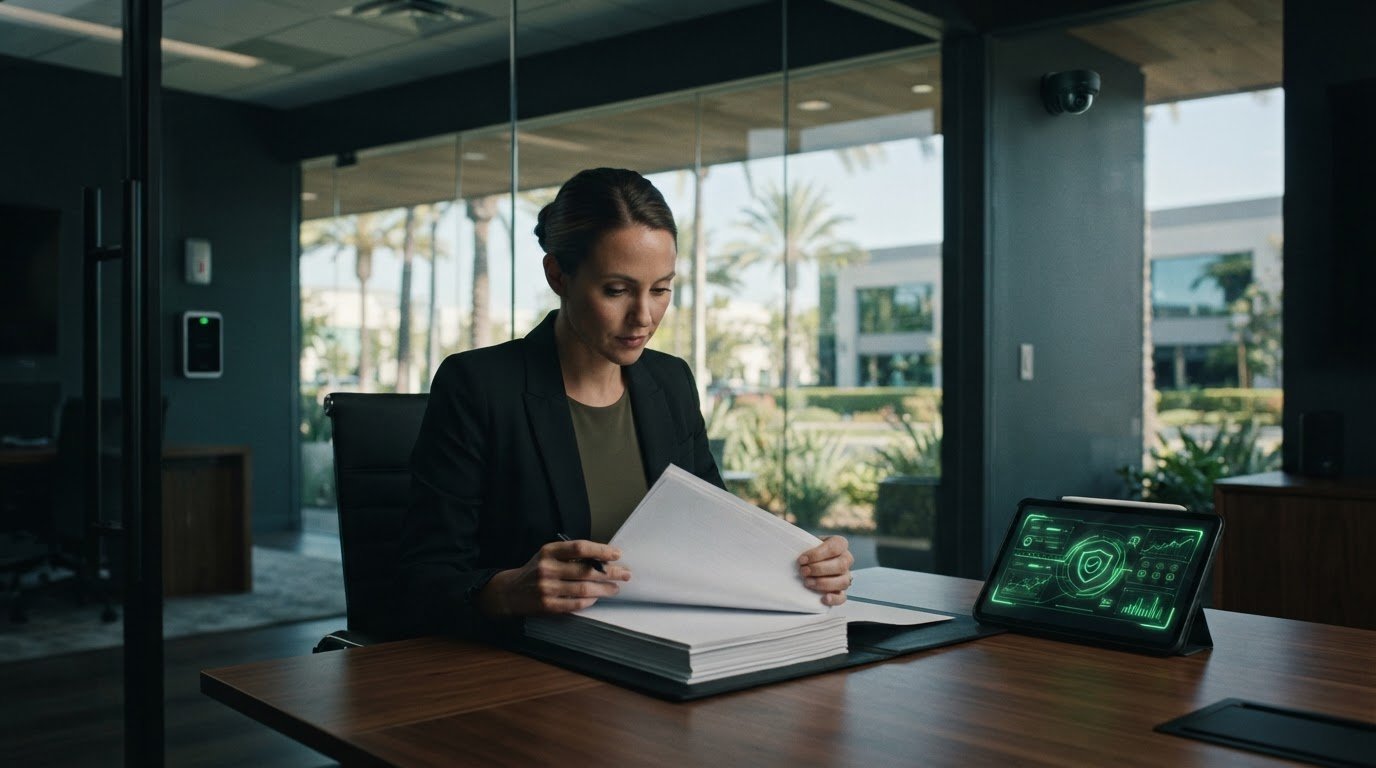
A useful assessment begins with a practical picture of the business. Note what you need to see, manage, or review, and gather details that help shape a suitable scope:
Priority areas, such as customer-facing spaces, offices, storage areas, or secondary entrances.
Operating hours, staff routines, and the times authorized employees or visitors access the property.
Existing cameras, alarms, and access devices, along with known limitations or gaps.
Privacy considerations, including the areas covered by cameras and where signage may be appropriate.
Keep the property layout in view. A narrow storefront, multiple office suites, and a commercial space with separate employee and customer entrances create different design considerations. Include privacy and signage in the planning conversation, and review current California guidance before making decisions about legal requirements.
Move from assessment to an integrated installation
Once priorities are clear, the design can match selected components to the property’s needs. Video surveillance supports visual coverage, alarms address intrusion-focused needs, and access control manages entry to designated spaces. Existing equipment matters too: the plan should account for what is already installed and how proposed components will work together.
Plan installation and configuration around how employees will use the system. Clear procedures for authorized access and reviewing system information help staff understand their roles in daily operations. A tailored design also aligns each component’s function with the business’s routines. Ongoing maintenance and support help keep the system attended to after installation, without assuming every property needs the same layers.
With the property details and operating goals ready, a professional assessment can define the system scope and guide design. Request a free security assessment to take the next step toward a security plan tailored to your business.
Professional Security System Design for Beverly Hills Small Businesses
Digital-Vision.AI is based in Beverly Hills and designs and installs commercial security systems for businesses. Rather than starting with a standard equipment package, each project can be shaped around the property, business priorities, and daily routines. This approach helps owners identify which components have a clear role and how they fit into the broader security plan.
Available layers include AI-powered video surveillance, customizable alarms, and biometric or RFID access control. A business may prioritize cameras for visual coverage, alarms for intrusion-focused needs, or access control for managing entry to selected spaces. The right scope follows the assessment, rather than an assumption that every small business needs every component.
What a tailored commercial security project can address
Security design connects identified needs to relevant system components. A business focused on reviewing activity may emphasize video surveillance; one with restricted staff areas may also consider access control. If intrusion detection is a priority, an alarm can be included as a distinct layer. The goal is to define what each selected component is intended to address.
Integration services bring selected components into a unified setup, with system configuration planned around the project’s requirements. This gives the business a framework for using its security tools without assuming every device or existing system will work together in the same way. A clear design also gives installation a practical reference: which components are included, where they serve the plan, and how they relate to business operations.
Consulting can help owners evaluate existing infrastructure and identify opportunities to optimize it before shaping the project scope. Reviewing current equipment alongside business priorities supports informed decisions about whether to retain, adjust, or add components.
Continue system support after installation
Installation is one stage of a system’s lifecycle. Maintenance and technical support provide ongoing help with system upkeep, while consulting can support further evaluation as business needs or the property change. This gives the business a way to revisit how the system serves its needs over time.
A free security assessment is a practical starting point for discussing your property, priorities, and current setup. Request a free security assessment from Digital-Vision.AI to begin planning a commercial security system tailored to your Beverly Hills business.
Make Your Next Security Decision With Confidence
A security plan should remain useful beyond installation day. Changes to staffing, operating hours, or the way you use the property can shift what you need from a system. Use the assessment to clarify current priorities and establish a thoughtful starting point for future decisions.
For a security system for small business Beverly Hills owners can tailor to their property, work with a partner that connects assessment, design, installation, integration, and ongoing support. Digital-Vision.AI serves commercial and residential properties with free security assessments, maintenance, technical support, and consulting throughout Southern California, including Beverly Hills, Orange County, and Irvine.
Arrange your free security assessment to take a practical first step toward a security plan shaped around your business.
Frequently Asked Questions
How much does a security system for a small business cost?
The cost depends on the property and the system’s scope, so there is no single figure that fits every business. Equipment selection, existing infrastructure, installation, integration, and ongoing support all affect project planning. A small storefront with a straightforward layout may have different requirements from a multi-room office. A security assessment can define the scope for your Beverly Hills business.
Can a small business use its existing security cameras in a new system?
It depends on the cameras’ condition and whether they can work with the planned system. Gather camera model information, note where each unit is installed, and identify how footage is currently recorded or reviewed. This gives the design process useful context for deciding whether the equipment can remain part of the plan, needs adjustment, or should be replaced as the system evolves.
Does a small-business security system need an internet connection?
That depends on the system design and the functions the business wants to use. Features that rely on remote access or online services generally need connectivity, while other system functions can be configured differently. For a Beverly Hills, Orange County, or Irvine business, include network access and possible connection interruptions in the planning discussion. Clarify which capabilities depend on the internet so operating expectations are clear.
How many security cameras does a small business need?
There is no fixed camera count for every business. The number depends on the areas that need visual coverage, the property’s shape, and the views each camera can provide. Mark entrances, checkout or reception points, and areas where valuable items are handled on a floor plan to make the discussion more concrete. Focus on useful coverage rather than choosing a number first and fitting the plan around it.
Can a small-business security system combine alarms and access control?
Yes. A business can combine alarm services and access control as part of a coordinated security system. An office, for example, might use access control to manage entry to a staff workspace while using an alarm for a separate intrusion-focused purpose. The design should define how each component fits the property and how authorized staff will use it. Integration services can bring selected components together in a unified setup.
What should a business prepare before a security assessment?
Prepare a current floor plan if available, a list of existing security equipment, and a short description of your operating schedule. Note which employees or visitors need access to particular areas, what you want to see or manage, and any recurring issues with the current setup. Photos or marked-up plans can help explain unusual entrances or shared spaces. These details give the assessment a practical starting point.
Are there privacy rules for business security cameras in California?
Yes, privacy should be considered when planning business cameras in California. Camera purpose, placement, signage, and what an area captures can all matter, so avoid recording beyond the business’s intended coverage. Privacy requirements can depend on the circumstances, and this answer is not legal advice. Review current California guidance for your situation before installation, especially if you are considering camera coverage in sensitive areas or audio recording.
Comments