


Retail Store Theft Prevention Solutions in Orange County
What if the most effective theft-prevention system isn’t the one with the most cameras, but the one that helps staff act on the right information? For Orange County retailers, shoplifting, after-hours intrusion, and unauthorized access call for different safeguards. Choosing retail store theft prevention solutions Orange County businesses can use starts with matching each security layer to a specific risk.
Cameras can document activity, but poor placement, unclear alerts, or no review process can leave staff with footage that only explains what happened afterward. Alarms and access control address different vulnerabilities, and disconnected systems can make security harder to manage. A useful plan considers how the technology will fit the store and how staff will use it.
This guide compares practical options, explains how video surveillance, AI-enabled analytics, alarms, and access control can work together, and outlines how to plan around your store’s layout and operating hours. You’ll also learn how Digital-Vision.AI designs, installs, integrates, and supports commercial security systems for Orange County retailers, as well as clients in Beverly Hills and Irvine.
Table of Contents
Retail store theft prevention solutions in Orange County: start with the risks
Protecting merchandise matters, but a practical security plan should also support staff and day-to-day operations. Start by understanding how the store is used, rather than simply adding equipment. A compact boutique with one entrance has different visibility needs from a larger store with multiple access points, self-checkout, and a stockroom that opens onto a delivery area.
Retail shrinkage is the loss of inventory through theft, error, damage, or other causes. The Retail Loss Prevention Overview describes common causes and prevention approaches. An inventory discrepancy can prompt a closer review, but it doesn’t by itself establish that theft occurred. Clear records and relevant footage can help teams investigate what happened.
Which retail theft risks should an Orange County store consider?
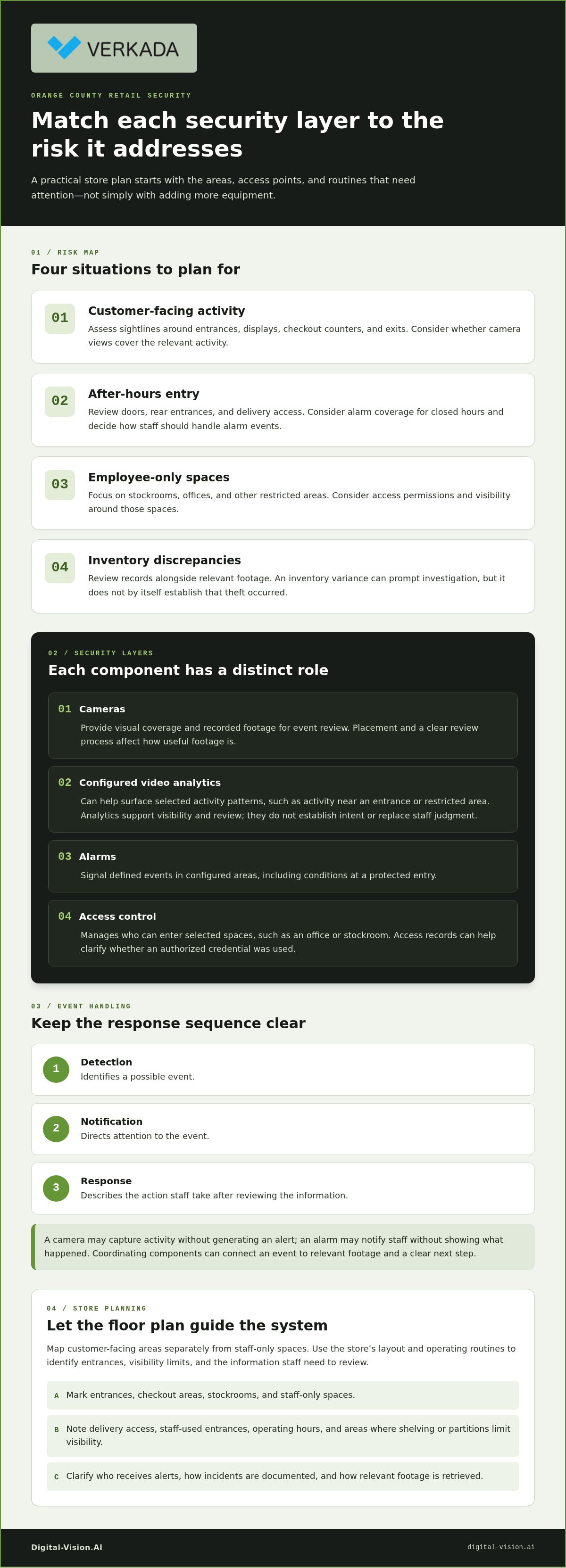
Map customer-facing areas separately from spaces intended for staff. For potential shoplifting around displays, checkout counters, or exits, assess sightlines and whether camera views cover the relevant activity. For after-hours entry, review doors, rear entrances, and delivery access, then consider alarm coverage when the store is closed. For restricted-area access, focus on stockrooms, offices, and other employee-only spaces.
Operating hours and layout also affect exposure. A store that receives deliveries before opening may need a different access plan from one that closes after evening trade. Note which entrances staff routinely use, where employees spend time, and where shelving or partitions limit visibility. These details help teams distinguish an observed customer incident from a door opened outside business hours or an unexplained inventory variance, without assuming the cause in advance.
What can a security system realistically do?
Security technology can support deterrence, live visibility, documentation, and a consistent incident-review process. Cameras provide visual coverage and recorded footage; configured analytics can help surface selected events. Alarms can signal defined conditions, while access control can manage entry to selected areas. When coordinated, these components can help staff understand what needs attention and where to review information.
A camera alone doesn’t guarantee theft prevention. A poorly placed view may miss key activity, and footage is less useful if nobody knows how to locate or review it. System design, configuration, staff procedures, and ongoing upkeep all affect how technology supports a response. Retail store theft prevention solutions Orange County businesses consider should reflect real workflows: who receives an alert, how staff document an incident, and how relevant footage is retrieved.
For customer-facing concerns: assess sightlines around entrances, displays, and checkout areas.
For closed hours: review entry points and decide how staff should handle alarm events.
For employee-only spaces: consider access permissions and visibility around stockrooms or offices.
For inventory discrepancies: pair careful record review with relevant footage rather than treating a variance as proof of theft.
This risk-first assessment gives you a practical basis for choosing and coordinating security layers. The next step is to understand what each component does and how it can support staff workflows.
How retail cameras, alarms, and access control work together
An integrated retail security system coordinates cameras, alarms, and access control around a store’s risks and daily routines. Instead of treating each device as a separate tool, the system connects relevant events to useful information. For example, an alarm event at a rear entrance can prompt staff to review the camera view covering that door. Access-control records can also help clarify whether an authorized credential was used.
Each component has a distinct role. Cameras provide visual coverage, recorded footage for event review, and, when configured, analytics that help surface selected activity. Alarms signal defined events in configured areas. Access control manages who can enter selected spaces, such as an office or stockroom. Integration can bring these signals and records into a more coherent review process.
Detection identifies a possible event, notification directs attention to it, and response is the action staff take after reviewing the information. These are separate stages, so configuration should make the handoffs clear. A camera may capture activity without generating an alert; an alarm may notify staff without showing what happened. Coordinating components can help connect an event to relevant footage and the next step.
Where AI video analytics can add useful visibility
Configured analytics can help identify selected activity patterns in camera footage, based on the system’s design. A store might configure analytics to bring attention to activity near an entrance or restricted area. These tools support visibility and review; they don’t establish intent or replace staff judgment. Set clear procedures for who checks an alert, how staff assess the footage, and how they document relevant events.
How alarms and access control complement surveillance
Alarms add a notification layer when configured areas or conditions trigger an event, such as activity at a protected entry. Access control can manage entry to selected staff-only spaces, using RFID credentials or biometric methods depending on the system design. Together, these technologies can help staff relate an access event or alert to camera footage. A commercial alarm system installation guide offers further context on planning alarm coverage.
Consider how the components could work together in common situations:
Door event: An alarm signals activity at a configured entrance, and staff review the corresponding camera view.
Restricted-space entry: Access control manages credentials, while surveillance supports visual review of the area.
Unusual activity: Configured analytics can flag selected activity for review, with staff following established procedures.
For retail store theft prevention solutions Orange County retailers can put into practice, integration should reflect store operations, not just technical capability. Digital-Vision.AI designs and installs tailored commercial security systems, coordinating surveillance, alarms, and access control around the store’s needs. Explore integrated retail security system design as a starting point for planning a coordinated setup.
Compare retail theft prevention solutions by store need
Security technology works best when each component addresses a defined operational need. Cameras provide visual coverage and recorded footage; configured analytics can help surface selected activity; alarms signal specified events; access control manages entry to designated spaces. The right combination depends on the store’s layout, operating routines, and the events staff need to see or review. No single layer serves every purpose.
Use the comparison below to connect common store scenarios with a relevant technology layer and a practical design consideration.
Which solution fits a single store, specialty shop, or larger retailer?
A smaller footprint may need a focused design around the entrance, checkout, and any restricted stock area, rather than every available component. A specialty shop can prioritize clear views of valuable displays and the route between customer areas and staff-only storage. Retailers with multiple locations may benefit from consistent configurations that are easier to manage across sites, while still tailoring coverage to each location’s entrances, floor plan, and operating routines.
When should a store combine multiple security layers?
Combine layers when distinct needs overlap. A store concerned with both customer-area visibility and closed-hours entry may use cameras alongside alarms; a stockroom with restricted access may also need access control. Integration can help staff connect an alert, access event, and relevant footage instead of switching between disconnected tools. A unified security ecosystem installation guide explores broader coordination considerations.
Technology can support visibility, notification, and documentation, but it can’t physically intervene. Its value lies in helping staff identify relevant events, review information, and follow established procedures. Good design considers who receives alerts, which views help clarify an event, and how staff can retrieve footage afterward.
When comparing retail store theft prevention solutions Orange County retailers can use, begin with the operational gap rather than the device. If the issue is limited visibility, assess camera coverage. If the concern is a defined entry event, consider alarm configuration. If access to a back room needs management, evaluate access control. Combine layers where the store’s actual needs intersect.
Plan a retail theft prevention system for your Orange County location
A well-planned system starts with store operations, then translates them into coverage, alerts, and access rules. Before selecting equipment, map the spaces people use and define what staff need to know when an event occurs. This sequence helps keep the design proportionate and makes installation, configuration, and future review more purposeful.
Step 1: Set operational goals. Identify the concerns the system should address, such as improving checkout visibility, receiving an alert about a configured entry point, or managing stockroom access.
Step 2: Map the store. Mark entrances, checkout areas, displays, stockrooms, offices, staff-only spaces, and delivery access. Note operating hours and when staff routinely enter restricted areas.
Step 3: Define coverage and access needs. Identify camera views that support useful visibility, areas where alarms may be appropriate, and who needs authorized access to each restricted space.
Step 4: Design and install the system. Align camera placement, alarm configuration, and access-control points with the map and operational goals. Plan how selected components will work together.
Step 5: Configure, review, and maintain. Set up relevant alerts and access permissions, clarify how staff review events, and plan ongoing system upkeep. Revisit the plan when store layout, hours, or workflows change.
What should a retail security design account for?
Design should reflect details that affect visibility and movement: shelving, lighting, display placement, entry points, and the routes staff use during a shift. A camera view that looks clear on a floor plan may be obstructed by a display or miss activity near checkout. Map critical areas alongside everyday workflows, then consider which staff members need access to stockrooms, offices, or other restricted spaces. A broader commercial security vulnerability review can help structure the risk-assessment process.
How do installation, integration, and maintenance fit together?
Professional installation puts the design into practice, while configuration aligns coverage, alarm conditions, and access permissions with the intended use of each area. Integration coordinates selected components so staff can follow a usable process rather than manage isolated tools. After installation, maintenance and technical support help keep system components operational and address issues that may affect everyday use. A sound plan accounts for all three stages, not just equipment placement.
Digital-Vision.AI provides commercial security design, installation, integration, and ongoing support for retailers in Orange County, including Irvine. Request a retail security assessment to plan a system around your store’s layout, operating hours, and security objectives.
Digital-Vision.AI retail theft prevention solutions in Orange County
Retail security is most useful when the system reflects how a specific store operates. Digital-Vision.AI serves commercial properties in Orange County, including Irvine, with security consulting, system design, and professional installation. Its services bring together AI video surveillance, customizable alarms, access control, and integration. The system is designed around the property, operating needs, and selected security objectives, rather than a one-size-fits-all package.
A tailored setup might focus camera coverage on customer areas and checkout, configure alarms around selected entry points, or manage access to a stockroom. AI analytics can be configured to surface selected activity for review, while staff procedures guide how alerts and footage are handled. These capabilities support visibility and incident review; they don’t guarantee that theft will be prevented.
What to expect from a tailored retail security assessment
A useful assessment starts with the store’s layout, entrances, operating hours, staff workflows, and areas with different access needs. Reviewing existing security equipment alongside the retailer’s objectives helps identify where current coverage supports operations and where a gap may remain. Consulting can then inform a coordinated recommendation for video surveillance, alarms, access control, or integration based on the property and the retailer’s priorities. For a broader perspective on this process, see strategic security consulting.
The assessment is also a chance to define practical requirements. Which areas need visual coverage? What events should generate an alarm? Which staff roles require access to restricted spaces? How should staff review relevant alerts or footage? Clear answers help translate security goals into design choices without assuming every store needs every technology layer.
Move from security plan to installed system
After the design is agreed, professional installation puts the planned components in place. Configuration aligns camera views, selected analytics, alarm conditions, and access permissions with intended workflows. When integration is part of the design, it coordinates selected components into a more usable system. Maintenance and technical support help retailers address system needs over time and keep components operational as store conditions change.
For retail store theft prevention solutions Orange County retailers can shape around their property, Digital-Vision.AI brings design, installation, integration, and ongoing support together. A considered plan makes technology easier for staff to use and gives each security layer a defined role. It also creates a practical basis for reviewing whether the setup continues to fit as store operations evolve.
Request a free security assessment to discuss your store’s layout, operating needs, and security objectives with Digital-Vision.AI.
Make your next security decision store-specific
A retail security plan shouldn’t be treated as a one-time decision. Store layouts, merchandise displays, staffing patterns, and operating hours can change, shifting what deserves attention. Review your security objectives when those conditions change, and consider whether the system still supports the way your team works. This keeps the technology aligned with the business as operations evolve.
The strongest retail store theft prevention solutions Orange County retailers can put in place begin with a clear understanding of current needs. A focused assessment turns those needs into practical priorities for the property and helps shape a system that fits the store without relying on a one-size-fits-all approach.
Take the next step with a complimentary review of your store’s security objectives. Request a free security assessment for your Orange County store and start planning a system around your needs.
Frequently Asked Questions
Can security cameras prevent shoplifting in a retail store?
Visible cameras and configured analytics may support deterrence, monitoring, and incident review, but they can’t guarantee shoplifting won’t occur. Their usefulness depends on camera placement, suitable views, configuration, staff procedures, and how they fit the broader security design. A camera can record an event without prompting action, so staff need a clear process for noticing relevant information, reviewing footage, and deciding what to do next.
What is the difference between retail security cameras and AI video analytics?
Retail security cameras capture video, while AI video analytics are configured capabilities that can help identify selected activity patterns in footage. For example, analytics may be set to bring attention to activity in a chosen area. Their usefulness depends on suitable camera views and configuration. Features vary by system, and analytics shouldn’t be assumed to identify every incident automatically or determine a person’s intent.
How can a retail store secure its stockroom and employee-only areas?
Access control can help manage entry to selected areas, using biometric or RFID methods as possible approaches. A retailer might assign stockroom access according to staff roles and review permissions when responsibilities change. Cameras or alarms may complement access control if the store’s layout and objectives call for them. Clear staff procedures still matter, including how credentials are handled and what to do when access needs change.
Can existing retail security cameras be integrated with alarms or access control?
Integration depends on the existing equipment, compatibility, configuration, and the retailer’s goals. A professional assessment can review how the current system operates and identify practical options without assuming every older component can be reused. A coordinated design may help staff connect related information, such as an alarm event and a corresponding camera view, within a more coherent security workflow.
How much do retail store theft prevention solutions cost?
Project cost depends on the property, selected components, installation requirements, integration needs, and ongoing support. A small store with focused coverage has different requirements from a larger property with multiple access points and restricted areas. A tailored assessment helps define an appropriate scope based on the retailer’s objectives. There isn’t one standard system or guaranteed return that applies to every store.
Do Orange County retailers need a security assessment before installing a system?
A security assessment can help review the store layout, operating needs, existing equipment, and objectives before system design. Digital-Vision.AI offers free security assessments for commercial clients in Orange County, including retailers in Irvine, and serves clients in Beverly Hills. The review can help shape a proportionate system recommendation, though it can’t promise a particular outcome.
How often should a retail security system be maintained?
Maintenance frequency depends on the system components, how they’re used, manufacturer guidance, and operating conditions. Periodically check that camera views still cover their intended areas, alerts are configured as expected, and access permissions reflect current staff roles. Review system health as part of routine operations, and use technical support to address issues. Regular upkeep can help identify problems, but can’t prevent every system failure.
Comments